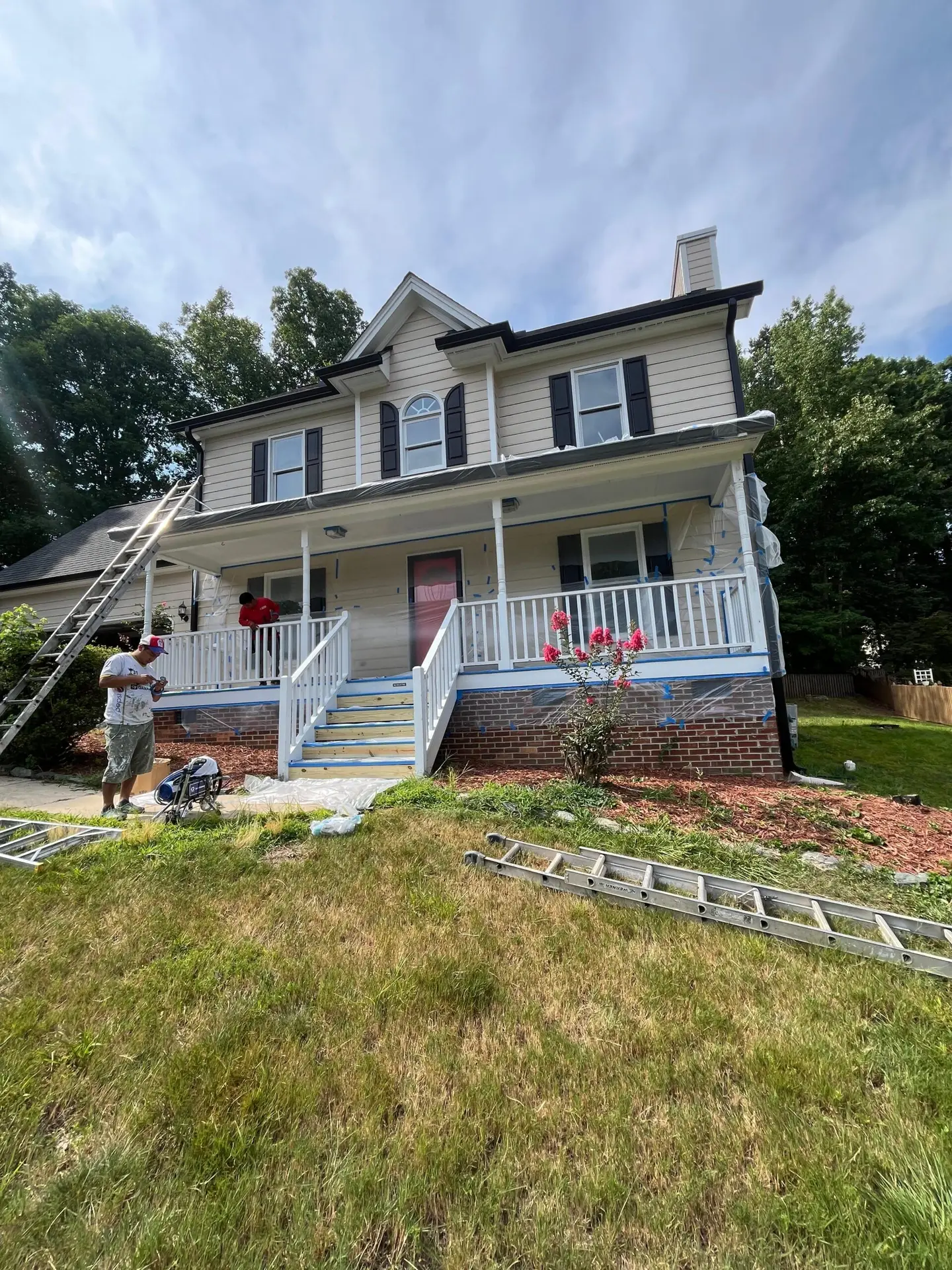
From small repairs to complete renovations, every project we take on is handled with precision, care, and attention to detail.
Recent Post
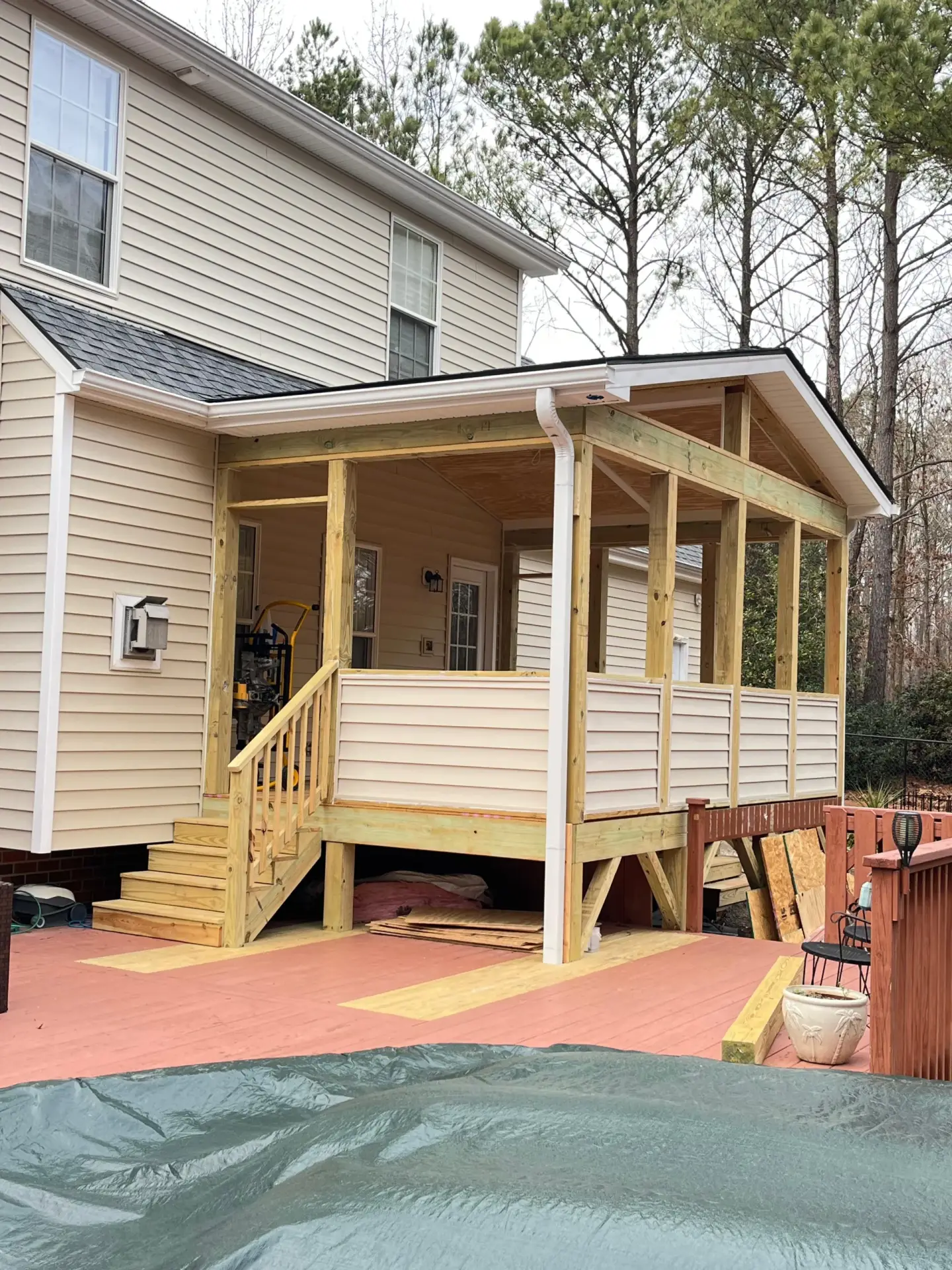
4-Season Porch vs. Screened Porch: Which Makes More Sense in NC?
November 6, 2026
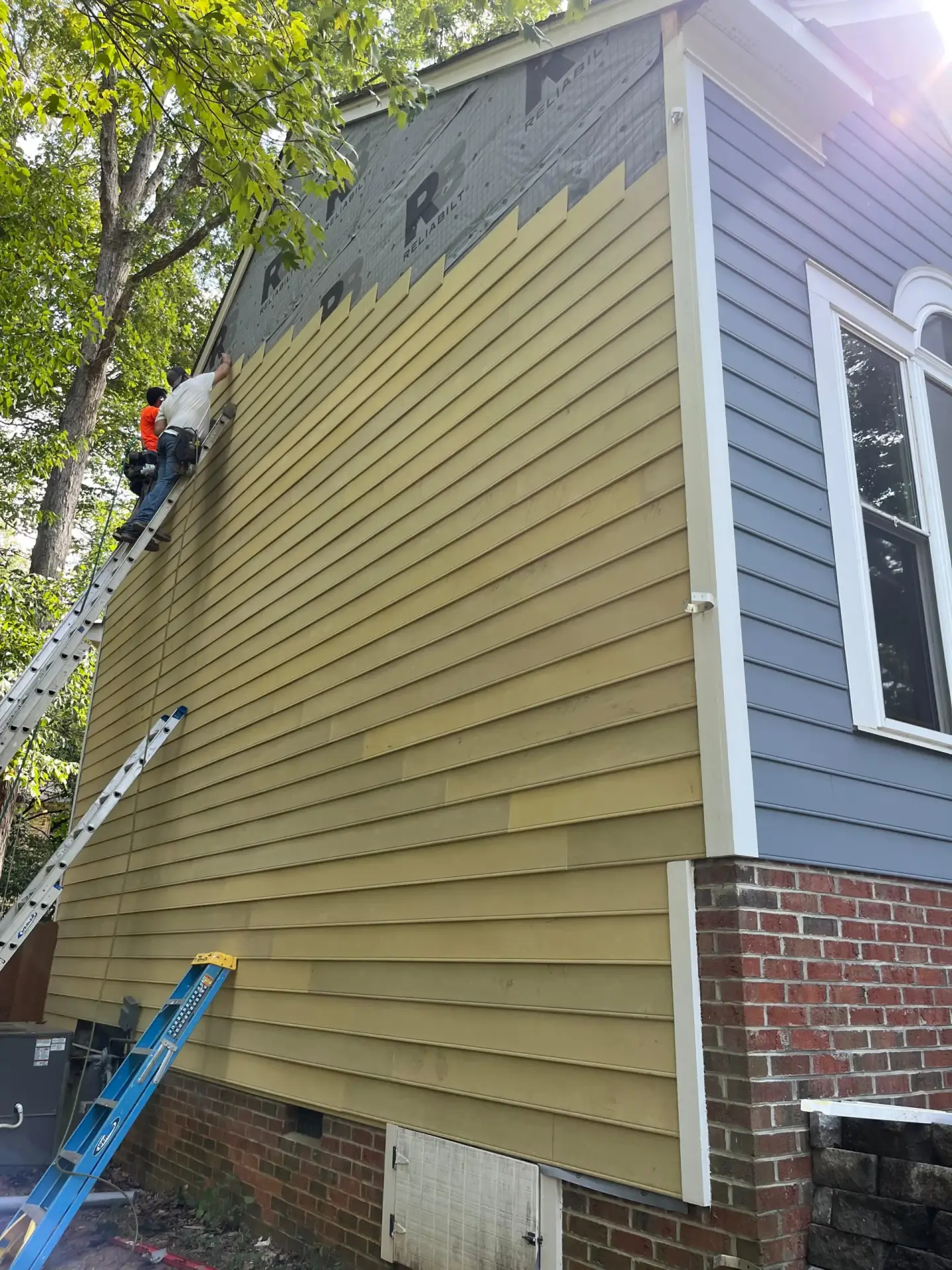
How to Tell If Your Siding Needs Repair or Full Replacement
October 29, 2026
How Gutters Protect Your Home’s Foundation in Apex, NC
October 22, 2026
Ready For A New Roof Installation?
Our company was founded with a clear goal: to deliver durable, high-quality solutions that protect and enhance residential and commercial properties.
North Carolina is a beautiful place to own a home — and a punishing one for exterior paint. The combination of hot summers, high humidity, and regular rainfall puts more stress on a home’s painted surfaces than most homeowners realize. Paint that performs well in a dry climate can blister, peel, and fade within a few years here if it isn’t the right product applied the right way.
If you’re planning an exterior paint project in the Raleigh area, understanding what makes paint hold up in NC’s climate is the difference between a finish that looks great for a decade and one that starts failing in two or three years.
Why Humidity Is So Hard on Exterior Paint
Humidity doesn’t just make summers uncomfortable — it actively works against paint adhesion and film integrity. Here’s what happens:
- Moisture trapped beneath the surface causes paint to bubble and blister. If paint is applied when humidity is too high, or if moisture in the substrate hasn’t fully dried, the film lifts from the surface as that moisture works its way out.
- Repeated expansion and contraction from daily temperature swings causes paint film to crack over time, especially on wood siding and trim. Once cracks form, water gets in and the cycle accelerates.
- Mold and mildew growth thrive in humid conditions. Paint without adequate mildewcide additives will show dark staining within a season or two in shaded or north-facing areas of a NC home.
- UV degradation compounds the problem. NC’s sunny summers fade and chalk paint surfaces, reducing their ability to shed water and resist moisture intrusion.
The right paint product and proper application conditions address all of these failure points directly.
What to Look for in Exterior Paint for NC Homes
100% Acrylic Latex Formula
For North Carolina’s climate, 100% acrylic latex is the standard for exterior use — not oil-based, not vinyl-acrylic blends. Full acrylic paint remains flexible as temperatures fluctuate, allowing it to expand and contract with the substrate without cracking. It also allows moisture vapor to pass through the film rather than trapping it, which is critical in a humid environment.
Built-In Mildewcide
Any exterior paint used in Wake County should include mildewcide in the formulation. This isn’t a premium feature — it’s a baseline requirement for a climate where mold and mildew are facts of life. Check the product label before specifying a paint; not all exterior paints include it at meaningful levels.
High Solids Content
Paint with higher solids content lays down a thicker, more durable film with each coat. This translates directly to better coverage, better adhesion, and a finish that holds up longer between repaints. Premium exterior paints from major manufacturers specify their solids content on the technical data sheet — it’s worth comparing.
Fade-Resistant Pigments
UV exposure in NC is significant enough that fade resistance should factor into color and product selection. Deeper colors fade more visibly, but even lighter shades can chalk and lose their sheen within a few years without quality pigment technology. Look for products that specifically reference UV protection or fade resistance in their marketing and technical specs.
Application Conditions Matter as Much as Product Choice
The best paint in the world will fail if it’s applied in the wrong conditions. In North Carolina, this is a real concern — summer humidity regularly runs above 70%, and painting in those conditions risks trapping moisture in the film.
Proper application conditions for exterior painting in NC:
- Temperature: between 50°F and 90°F, with no rain forecast for at least 24 hours after application
- Humidity: ideally below 70%; above 85% is generally too high for reliable adhesion
- Surface moisture: siding, trim, and masonry must be fully dry — typically 24–48 hours after rain before painting begins
- Time of day: avoid painting in direct afternoon sun, which causes the paint to dry too quickly and reduces adhesion
A professional painter working in this climate schedules around the weather, not in spite of it. Rushing an exterior paint project during a humid NC summer is one of the most reliable ways to end up with a premature failure.
Surface Preparation: The Step That Determines How Long Paint Lasts
No paint product compensates for poor prep. In NC’s climate, prep work is especially critical because moisture and biological growth are already working against adhesion before the first coat goes on.
A proper exterior prep process includes:
- Pressure washing to remove dirt, chalk, mold, mildew, and loose paint
- Scraping and sanding any areas where the existing paint has peeled, bubbled, or cracked
- Spot priming bare wood, repaired areas, and any surface where the substrate is exposed
- Caulking all gaps around windows, doors, trim, and penetrations before painting begins
Skipping or rushing any of these steps shortens the life of the finish — regardless of what product goes on top.
Final Thoughts
Exterior paint in North Carolina has to work harder than it does almost anywhere else. The right product, applied correctly, in the right conditions, over properly prepared surfaces — that combination is what produces a finish that holds up through NC’s summers and stays looking sharp for years.
Yireh Roofing LLC provides interior and exterior painting services throughout Raleigh, Cary, Apex, Holly Springs, Clayton, and Wake Forest. Contact us today to schedule a free estimate for your exterior painting project.
Post Tags :
Facebook
Twitter
LinkedIn
Yireh Roofing LLC
At Yireh Roofing LLC, we are proud to be a leading provider of roofing and home improvement services in Raleigh, NC – Cary, NC – Apex, NC – Holly Springs, NC – Clayton, NC – Wake Forest, NC, and surrounding communities within an 80-mile radius.
Services
Information
- (919) 753-8309
- (919) 586-1010
- info@yirehroofingllc.com
- Raleigh, NC - Cary, NC - Apex, NC - Holly Springs, NC - Clayton, NC - Wake Forest, NC
- 80 Miles Of Coverage
- Mon to Fri 8:00 AM - 6:00 PM
- Saturday 8:00 AM - 12:00 MD
- Sundays: Emergencies only
- Residential & Commercial
- We have Insurance
Experience the difference of working with a company that truly cares about your property.