From small repairs to complete renovations, every project we take on is handled with precision, care, and attention to detail.
Recent Post
How Gutters Protect Your Home’s Foundation in Apex, NC
October 22, 2026
Attic Conversion Ideas for Homeowners in Cary, NC
October 15, 2026
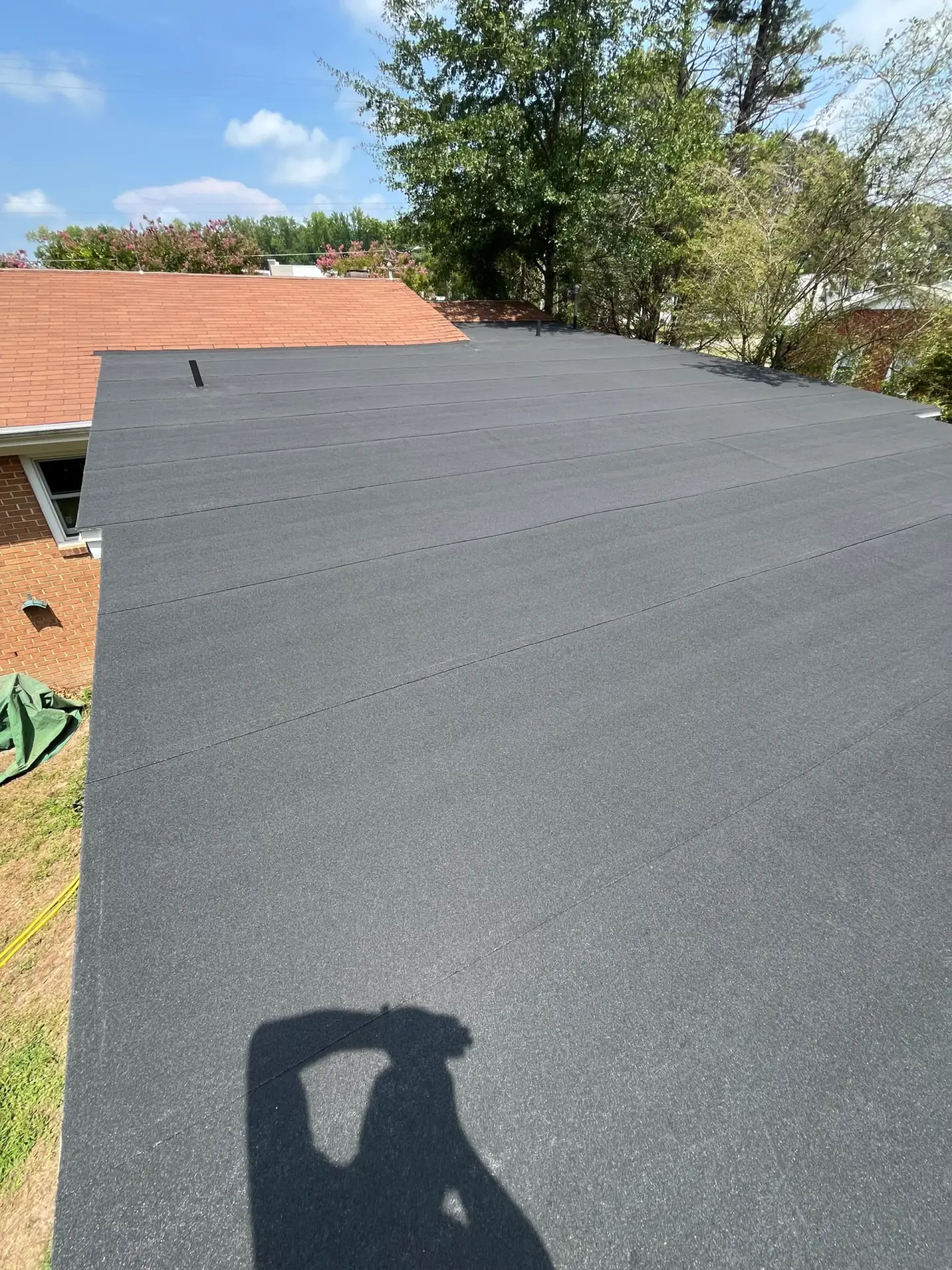
When Your Home Has Both a Flat and Pitched Roof in Raleigh, NC
October 9, 2026
Ready For A New Roof Installation?
Our company was founded with a clear goal: to deliver durable, high-quality solutions that protect and enhance residential and commercial properties.
Your siding takes on everything the weather throws at it — heat, cold, rain, wind, and impact — year after year. At some point, every home’s siding starts to show wear. The question most homeowners face isn’t whether something needs attention, but whether a targeted repair will solve the problem or whether full replacement is the smarter investment.
The answer depends on a few key factors: how widespread the damage is, how old the siding is, and whether the damage has reached the structure underneath.
Signs That Repair Is Likely Enough
Not every siding problem requires a full replacement. In many cases, isolated damage caught early can be fixed efficiently without touching the rest of the home’s exterior.
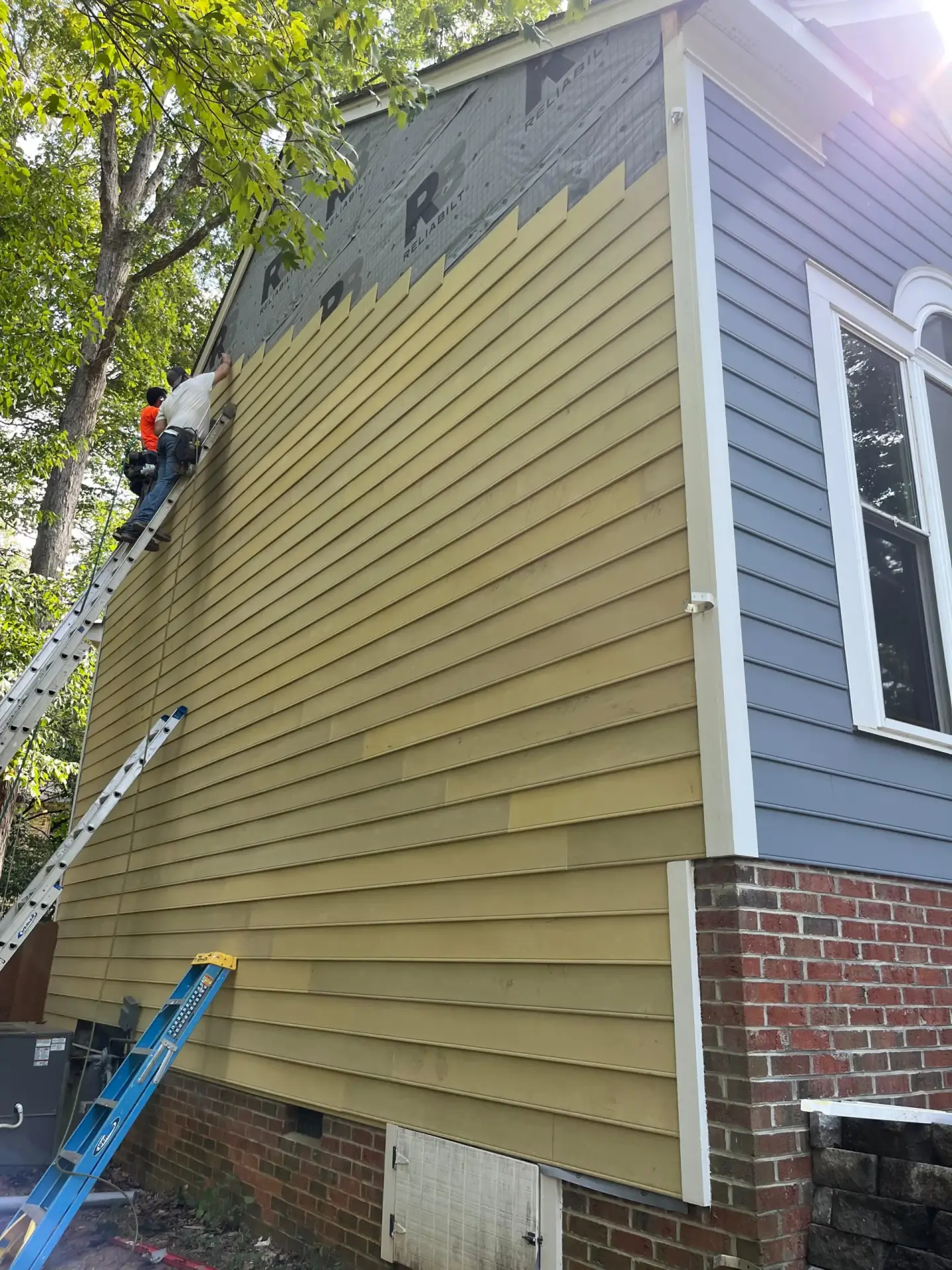
- A single panel or small section is cracked or broken — Vinyl and fiber cement siding panels can often be replaced individually without disturbing surrounding sections. If the damage is limited to one area from a specific impact or storm event, repair is usually the right call.
- Paint is peeling on a localized section — On wood or fiber cement siding, peeling paint in one area may indicate a moisture issue limited to that section. Addressing the source of moisture and repainting the affected area is often sufficient.
- Caulking around windows or joints has failed — Gaps in caulking allow water infiltration but don’t necessarily mean the siding itself is compromised. Recaulking is a straightforward repair that prevents larger problems from developing.
- One or two panels have pulled away or warped — A small number of panels that have lifted, warped, or separated from the wall can be refastened or replaced without a full project.
The common thread: the damage is isolated, the surrounding siding is in good condition, and the structure behind the panels shows no signs of moisture intrusion.
Signs That Full Replacement Is the Better Investment
Some siding conditions signal that repairs will only delay the inevitable — and that continuing to patch an aging or compromised system will cost more in the long run than replacing it.
- Widespread warping, buckling, or separation — When multiple sections across the home show the same problem, it’s usually a sign of age or systemic installation failure. Replacing panel by panel becomes more expensive and disruptive than a single replacement project.
- Rot or soft spots behind the panels — If the sheathing or framing beneath the siding has been compromised by moisture, repair isn’t just a surface fix — it’s a structural one. This level of damage almost always warrants full removal to assess and address what’s underneath.
- Visible mold or mildew that keeps coming back — Surface mold can be cleaned, but recurring mold growth often signals that moisture is trapped between the siding and the wall. This points to a ventilation or installation problem that repair alone won’t fix.
- High energy bills with no other explanation — Older siding that has degraded significantly loses its insulating value. If your heating and cooling costs have climbed without a clear cause, compromised siding may be a contributing factor.
- The siding is 20–30+ years old — Vinyl siding typically lasts 20 to 40 years; wood siding less, depending on maintenance history. If the material is approaching the end of its useful life and showing multiple signs of wear, replacement makes more financial sense than continued repair.
- Fading and chalking across the entire exterior — Significant color fading and a chalky surface texture indicate UV degradation throughout the material. At this stage, the siding has lost much of its protective capacity, not just its appearance.
The Risk of Waiting Too Long
The most common mistake homeowners make with siding is delaying the decision. Siding isn’t just aesthetic — it’s the primary barrier protecting your home’s sheathing, insulation, and framing from moisture. When failing siding goes unaddressed, water works its way into the wall cavity and begins affecting the structure. What starts as a siding replacement project can become a siding replacement plus sheathing repair plus mold remediation — a significantly larger and more expensive scope.
Early inspections and honest assessments save money. If you’re unsure whether your siding needs repair or replacement, the answer almost always comes from pulling back a damaged panel and looking at what’s behind it.
What a Professional Inspection Covers
A qualified contractor evaluating your siding will look beyond the surface condition. A thorough inspection includes:
- Checking panels for warping, cracking, separation, and fading
- Probing any soft or discolored areas for rot behind the panels
- Inspecting the house wrap or building paper beneath removed sections
- Evaluating caulking, flashing, and seams around windows, doors, and corners
- Assessing whether the existing installation followed best practices or has systemic gaps
The inspection tells you not just what’s wrong, but why — which determines whether repair addresses the root cause or simply buys time.
Final Thoughts
Whether your siding needs a targeted repair or a full replacement, the goal is the same: a weather-tight, structurally sound exterior that protects your home for years to come. If you’re seeing any of the warning signs above, don’t wait for the damage to reach the structure underneath.
Contact us today to schedule a siding inspection and get an honest assessment of what your home needs.
Post Tags :
Facebook
Twitter
LinkedIn
Yireh Roofing LLC
At Yireh Roofing LLC, we are proud to be a leading provider of roofing and home improvement services in Raleigh, NC – Cary, NC – Apex, NC – Holly Springs, NC – Clayton, NC – Wake Forest, NC, and surrounding communities within an 80-mile radius.
Services
Information
- (919) 753-8309
- (919) 586-1010
- info@yirehroofingllc.com
- Raleigh, NC - Cary, NC - Apex, NC - Holly Springs, NC - Clayton, NC - Wake Forest, NC
- 80 Miles Of Coverage
- Mon to Fri 8:00 AM - 6:00 PM
- Saturday 8:00 AM - 12:00 MD
- Sundays: Emergencies only
- Residential & Commercial
- We have Insurance
Experience the difference of working with a company that truly cares about your property.